Functions and Structure
1. What Is a Water Purifier Solenoid Valve?
In a reverse osmosis (RO) water purifier, the solenoid valve is an important automatic control component. The two most common types are the inlet solenoid valve and the wastewater solenoid valve. They are mainly used to control water flow on/off operation and wastewater discharge. Working together with the purifier’s main control board, power supply system, solenoid valves enable automatic water production, water supply shut-off after operation, RO membrane flushing, and leakage prevention. These functions help improve the stability and service life of the RO water purifier.
2. Function of Inlet Solenoid Valve in RO Water Purifier
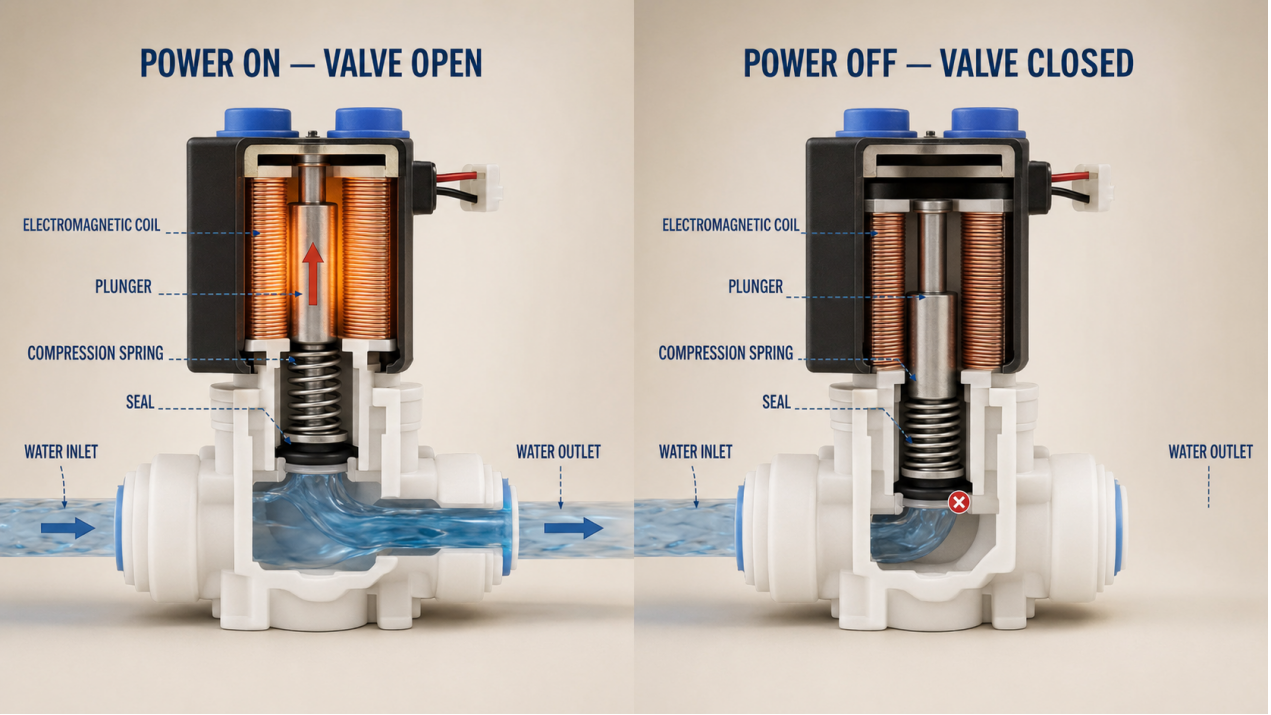
The inlet solenoid valve is typically installed at the raw water inlet of a water purifier. Its main function is to control the tap water flow into the water purifier.
When the purifier starts water production, the control board sends a signal to open the solenoid valve, allowing tap water to flow into the PP filter, activated carbon filters, RO membrane, and other filtration stages for purification.
When the purifier stops operating, the inlet solenoid valve closes to shut off the water supply. This helps prevent the internal components from being exposed to continuous water pressure and reduces the risk of leakage caused by aging or damage to the water tubes and connections.
Inlet Solenoid Valve
3. Function of Wastewater Solenoid Valve in RO Water Purifier
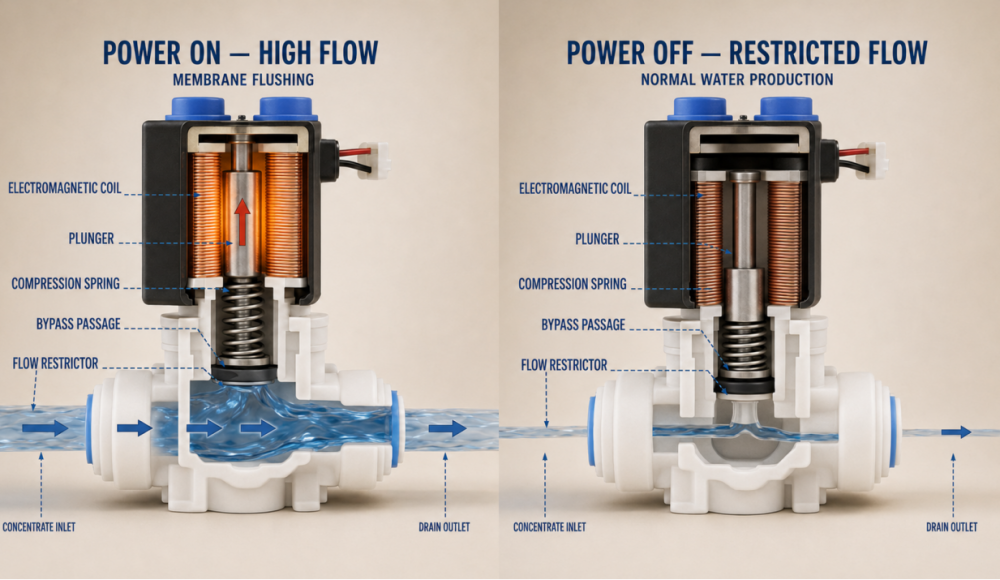
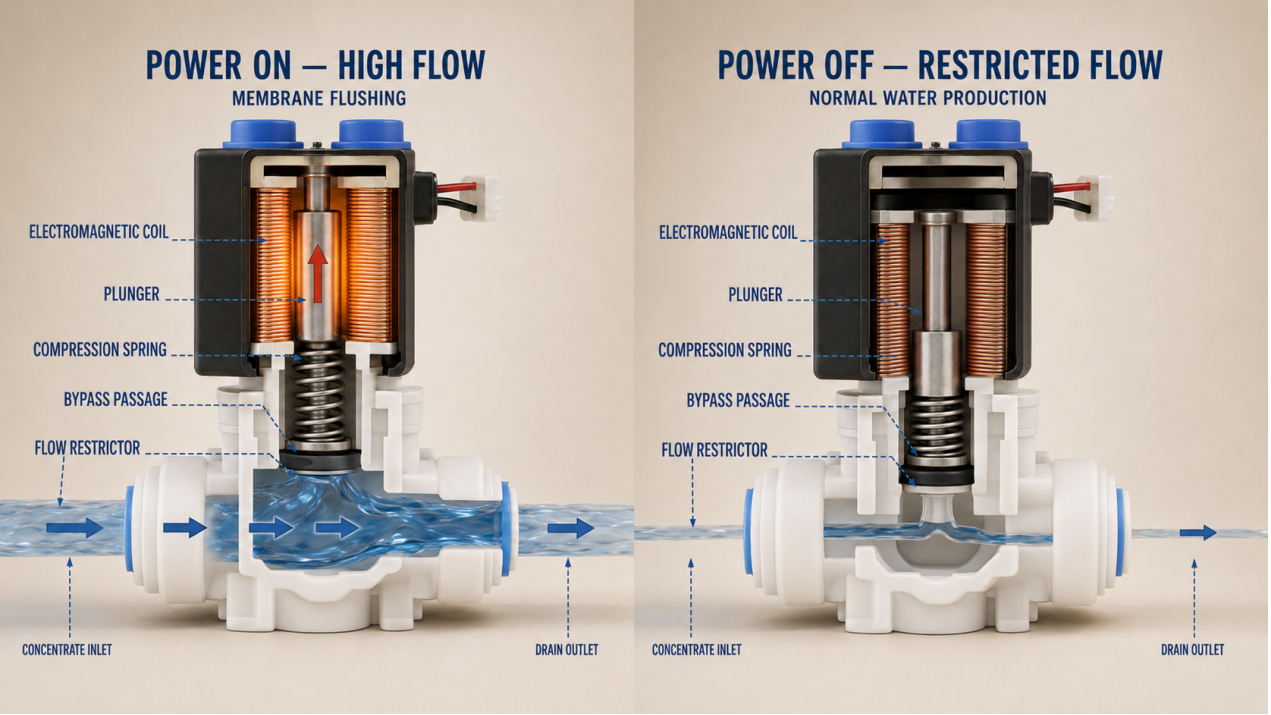
After water enters the RO membrane, it is separated into purified water and concentrate water, which contains a higher concentration of dissolved salts and other rejected substances. The concentrate must be discharged through the drain tube at a controlled flow rate.
RO systems commonly use one of two drain-control designs: a separate flow restrictor working together with a flush solenoid valve, or a combined wastewater valve with an integrated flow-restriction function. During normal water production, the flow restrictor maintains controlled concentrate flow and the pressure required for membrane operation. During flushing, the valve opens a higher-flow path to increase water flow across the membrane surface and help remove accumulated contaminants. When the purifier is in standby, the drain path is shut off.
Wastewater Solenoid Valve
4. Structure of a Water Purifier Solenoid Valve
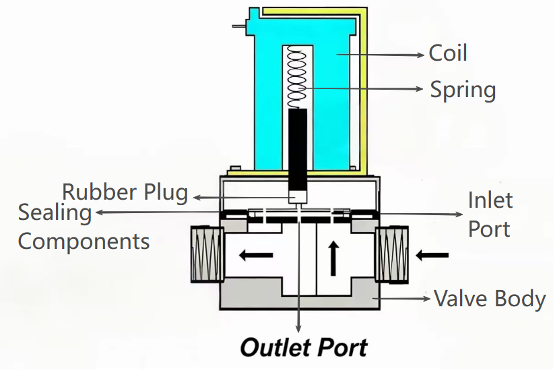
A water purifier solenoid valve is mainly composed of electromagnetic coil, valve body, plunger, spring, and sealing components. The electromagnetic coil is the driving component of the solenoid valve. When the coil is energized, it generates a magnetic field that moves the plunger. Depending on the valve design, this action opens the main flow path directly or operates it through a pilot passage.
The valve body is typically made of food-grade plastic and is designed with an inlet, outlet, and internal water flow channels. The plunger controls the flow of water, while the sealing components work together to ensure a reliable seal and prevent leakage when the valve is closed.
5. Installation Methods of Water Purifier Solenoid Valves
Water purifier solenoid valves are mainly installed using two types of connection methods: Quick Connect Type and Thread Type. Quick Connect solenoid valves are the most commonly used solution for household RO water purifiers due to their easy installation, reliable sealing performance, and convenient maintenance. They are widely applied in high-flow household RO systems, including 600GPD, 800GPD, 1000GPD, and 1200GPD water purifiers.
Quick Connect solenoid valves are typically designed with 1/4” or 3/8” PE tube connections. The 1/4″ Quick Connect structure is commonly used in standard household RO systems and wastewater solenoid valves, while the 3/8″ Quick Connect structure is more suitable for high-flow RO water purifiers above 600GPD.
Thread-type solenoid valves are mainly used in commercial water purification equipment. Common thread specifications include G1/8, G1/4, G3/8, and G1/2. During installation, threaded fittings and sealing materials such as PTFE thread tape are usually required to ensure a secure and leak-free connection. Compared with Quick Connect valves, threaded valves provide stronger connections but require more installation steps and are less convenient for maintenance.
6. What Does CC Mean in an RO Water Purifier Wastewater Solenoid Valve?
The CC value refers to the wastewater flow rate of the solenoid valve under specified testing conditions. It is usually measured in ml/min (milliliters per minute). For example, a 300CC wastewater solenoid valve allows approximately 300ml of wastewater to flow through per minute under standard test conditions. A higher CC value indicates a higher wastewater discharge capacity, which provides a larger flushing flow rate for the RO membrane.
The CC value of a wastewater solenoid valve is a key parameter in RO water purifier design. The correct selection of wastewater flow rate helps the RO membrane maintain stable working pressure, improves water purification efficiency, and extends the service life of the RO membrane.
If the wastewater flow rate is too low, waste water may remain on the membrane surface, increasing the risk of scaling and fouling, which can reduce water production performance. If the wastewater flow rate is too high, excessive water may be discharged, increasing wastewater generation.
7. Conclusion
The inlet solenoid valve and wastewater solenoid valve are essential components in RO water purifiers. The inlet valve controls raw water supply and improves system safety, while the wastewater valve manages wastewater discharge, maintains RO membrane pressure, and supports automatic flushing.
Looking for reliable RO water purifier solenoid valves or complete RO system solutions? Jeefy Water provides professional OEM/ODM services, product specifications, bulk quotations, and technical support for global water purifier manufacturers, distributors, and brands. With extensive experience in water purification solutions, Jeefy Water is committed to delivering high-quality components and reliable support to help customers develop efficient and stable RO water purifier.
If you need further guidance, feel free to share your water purifier model and local water conditions. Practical, experience-based suggestions often make the biggest difference.