Introduction
Struggling to select the right reverse osmosis membrane for your water purifier?
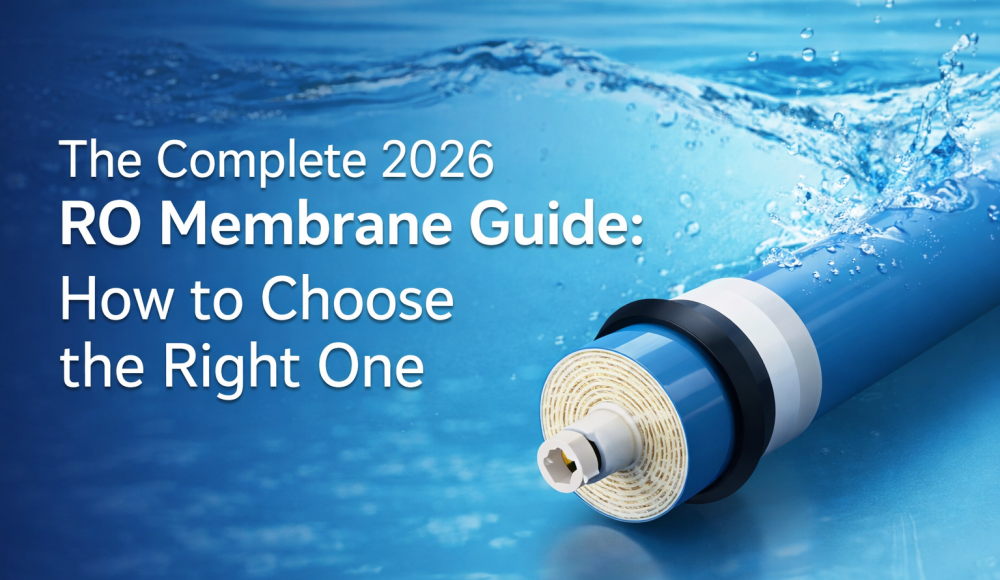
This updated 2026 guide is designed to simplify the decision-making process. We compare leading RO membrane brands—DOW Filmtec, Toray, Hydranautics, Vontron and CSM—and break down the specifications that actually matter, including flow rate (GPD), salt rejection rate, wastewater ratio, and fouling resistance.
You will also learn how to check membrane compatibility, avoid common installation mistakes, and evaluate long-term ownership costs. From a system engineering perspective, membrane selection is not just about performance on paper, but about long-term stability and reliability of the entire purification system.
With the practical selection logic and FAQ below, you can make a confident, informed decision to optimize both water quality and system performance.
Three Essential Questions to Ask Before Buying an RO Membrane
Before diving into technical specifications, it is important to clarify three basic questions. Your answers will guide the entire selection process.
Household Size & Daily Water Usage
How many people use the system, and is it mainly for drinking, cooking, or both? This determines the required membrane flow rate (GPD). An undersized membrane usually results in slow output and long waiting times.
Local Tap Water Quality (TDS & Hardness)
Is your water hard, or does it have a high TDS (Total Dissolved Solids) level? Poor feed water quality increases fouling risk and places higher demands on membrane durability. Municipal water reports or a simple TDS meter can provide useful reference data.
Primary Purpose of Use
Is your goal basic drinking water safety, improved taste, or protection of appliances? This affects how much importance should be placed on salt rejection rate and whether additional post-treatment stages, such as remineralization, are necessary.
Key Takeaway:
A family of four living in a hard-water area requires a very different membrane setup than a single user in a region with moderately soft water.
RO Membrane Specifications Explained
Understanding the following parameters will help you match the membrane to your system design, usage habits, and local water conditions.
Understanding GPD (Flow Rate)
-
50–100 GPD
Traditional tank-based systems. Lower upfront cost but slower output. Suitable for small households with limited usage. -
400–600 GPD
The mainstream choice for modern tankless RO systems. A 400–500 GPD membrane comfortably supports a family of three to four for daily drinking and cooking needs. In practice, this range also offers a good balance between pump load, noise level, and membrane lifespan. -
600–800 GPD
Designed for larger families or users who prefer near-instant flow without waiting. -
1000+ GPD
Suitable for large households, light commercial use, or whole-house applications.
Pro Tip:
For most new residential installations, a tankless system paired with a 400–800 GPD membrane provides the best balance between convenience, stability, and long-term reliability.
Salt Rejection Rate
-
Minimum acceptable level: ≥95% for a new membrane
-
Recommended level: ≥98%, typically achieved by premium brands such as DOW and Hydranautics
A consistently high salt rejection rate over time is more important than the maximum number printed on the label.
Recovery Rate & Wastewater Ratio
-
Typical range: 1:1 to 2:1 (pure water to wastewater). For example, our M-series products mostly feature 1:1 ratio.
-
Caution: Extremely low wastewater ratios (such as 3:1 or 4:1) often shorten membrane lifespan
From an engineering standpoint, extreme water efficiency usually increases hydraulic stress inside the membrane. A 1.5:1 or 2:1 ratio is often the best compromise between efficiency and durability for residential systems.
Fouling Resistance
-
Top performers: Toray and Hydranautics are well known for advanced fouling-resistant membrane technologies.
Best practice is to pair a fouling-resistant membrane with regular pre-filter replacement. PP sediment filters and carbon blocks play a critical role in protecting the RO membrane and extending its service life.
The Real Cost of Ownership: A Long-Term View
When selecting an RO membrane, the purchase price alone does not reflect the true cost.
-
Membrane cost:
Premium membranes typically cost more upfront but provide more stable performance and longer service life. -
Water efficiency cost:
Over time, wastewater ratio differences can translate into hundreds of gallons of water saved or wasted. -
Maintenance cost saver:
Timely replacement of pre-filters is the most economical way to extend membrane life. PP sediment filters and carbon blocks act as the membrane’s first line of defense and should be replaced every 6–12 months as recommended.
Expert Tips & Common Mistakes to Avoid
-
Avoid unrealistically low prices:
Heavily discounted “DOW” or “Toray” membranes sold through unofficial channels are often counterfeit and show poor rejection performance. -
Buy from authorized sources:
Purchase from official brand stores, authorized distributors, or professional water treatment suppliers. -
Use a TDS meter:
A basic TDS pen is an inexpensive but valuable tool. When purified water TDS rises above 10–15% of the source water level, it is usually time to plan membrane replacement.
Golden Rule of Maintenance:
Never skip pre-filter changes. A low-cost PP filter protects a high-value RO membrane. This is not optional.
From a manufacturer’s perspective, long membrane life is achieved through proper system balance and regular maintenance—not aggressive specifications alone.
Frequently Asked Questions (FAQ)
Q1: How often should an RO membrane be replaced?
Under typical household conditions, it is common every 1–3 years. However, actual lifespan depends on the source water quality and usage. A rising output TDS value or a reduced flow speed (signaling the membrane is clogged) is the most reliable indicator that replacement is needed.
Q2: Can I install a higher GPD membrane than the original?
This is generally not recommended. Increasing membrane capacity without adjusting system components can lead to imbalance, reduced performance, or even equipment damage. If an upgrade is necessary, consult qualified service technicians or professional service engineers.
Q3: What is the difference between 1812 and 3012 membranes?
The difference lies in size and capacity. The 1812 membrane is standard for under-sink residential systems. The 3012 membrane is longer and contains more membrane material, enabling higher flow rates and sometimes longer service life, but it requires a larger housing.
Q4: Is a 1:1 wastewater ratio better than 2:1?
Not necessarily. While a lower wastewater ratio improves water efficiency, it may increase internal stress on the membrane. For most residential systems, a 1.5:1 or 2:1 ratio provides the best balance between efficiency and durability.
Q5: Why does a 1000 GPD membrane feel slow in real use?
GPD ratings are measured under laboratory conditions with specific water pressure and temperature. In real homes, lower pressure or colder water reduces output. A properly matched booster pump can help achieve closer-to-rated performance.
Final Recommendation
Choosing the right RO membrane requires understanding your household’s water usage, feed water quality, and system design. By focusing on compatibility, realistic specifications, and long-term maintenance, you can significantly improve both system reliability and water quality.
If you need further guidance, feel free to share your water purifier model and local water conditions. Practical, experience-based suggestions often make the biggest difference.